
Musée d’Orsay + Opera Garnier Combo Ticket 2026: Is It Worth It?
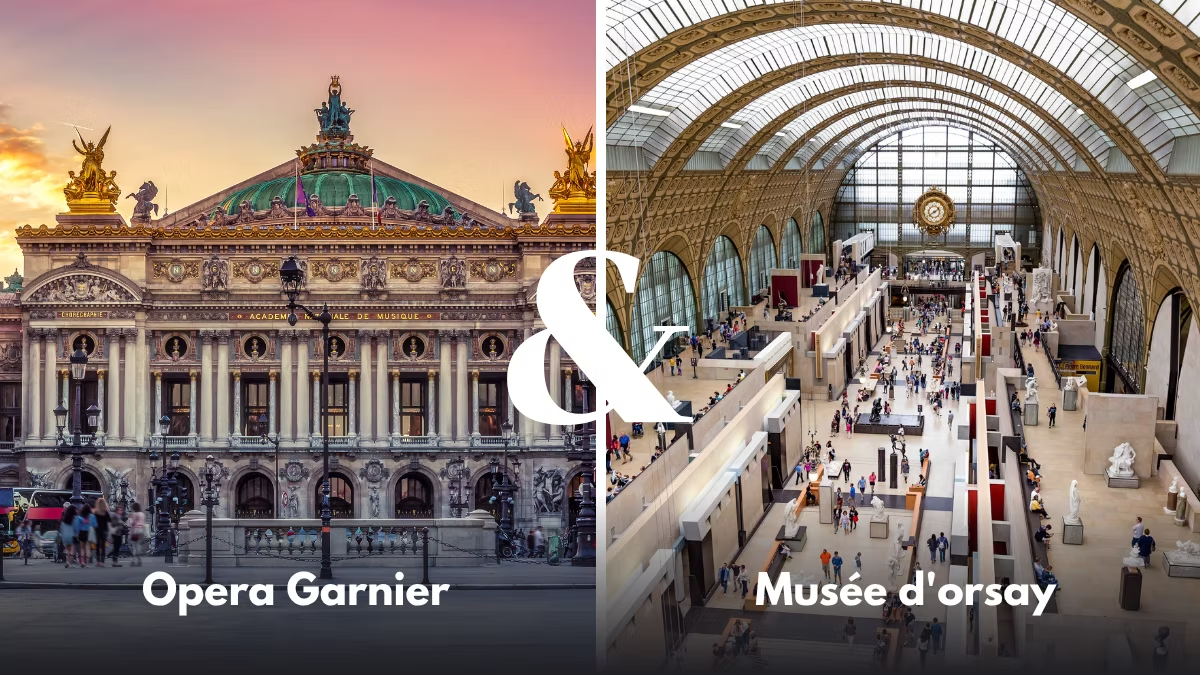
The Musée d’Orsay + Opera Garnier combo ticket (available online, product b9536) covers self-guided entry to both venues for approximately €28–€35 per adult — modestly cheaper than buying separately. The two venues are 3 km apart (15–20 minutes by metro, 35–40 minutes on foot via the Seine). The recommended sequence is Opera Garnier at 10:00, lunch near the Louvre, then Musée d’Orsay from 13:00. Both together make a coherent full cultural day rooted in the same Belle Époque period of Paris history.
The Musée d’Orsay and Opera Garnier are among the most natural pairings in Paris — not just geographically but historically and thematically. Both are Second Empire monuments, both are architectural masterpieces, and both give you a window into the same gilded period of Parisian cultural life. The Degas ballet paintings in the d’Orsay were made at the Paris Opera. The Impressionists who hung in those galleries attended the same operas and performances that filled Opera Garnier’s auditorium. Visiting both in sequence creates a whole that neither delivers alone.
Top Tickets
What the Combo Ticket Includes
- Self-guided entry to Opera Garnier — Grand Staircase, Grand Foyer, auditorium (subject to rehearsal schedule), and the Bibliothèque-Musée de l’Opéra
- Self-guided entry to the Musée d’Orsay — full permanent collection including the Impressionist and Post-Impressionist rooms on the top floor, Art Nouveau decorative arts, and the sculpture halls
Not included: Audio guides at either venue (hireable on-site, ~€5–€6 each), guided tours, or temporary exhibitions at the d’Orsay requiring a supplementary ticket.
Validity: Both entries are valid for the same day in most configurations. Confirm the exact terms on the listing at the time of booking — some ticket versions allow use across two consecutive days, which is a useful flexibility for visitors who want to take each venue at a slower pace.
Is the Combo Worth It? Price Breakdown
| Ticket | Standard individual price (2026 approx.) |
|---|---|
| Opera Garnier self-guided entry | ~€14 |
| Musée d’Orsay entry | ~€16 |
| Total if bought separately | ~€30 |
| Combo ticket price | ~€28–€35 |
The financial saving on the combo is modest — typically €0–€5 depending on the day and platform pricing. The real value is convenience: one booking secures timed entry slots for both venues simultaneously, which matters in peak season when both sites can sell out preferred slots well in advance.
Paris Museum Pass holders: Both Opera Garnier and the Musée d’Orsay are covered by the Paris Museum Pass. If you hold a valid pass, skip the combo ticket — the pass covers both entries. The combo is the right choice only for visitors without the pass planning specifically these two venues.
The Best Order: Opera Garnier First
Visit Opera Garnier in the morning (arrive at 10:00, the building’s opening time) and the Musée d’Orsay in the early afternoon. Opera Garnier is at its least crowded in its first hour; the Grand Staircase and Grand Foyer are most photogenic in morning light. The Musée d’Orsay opens at 09:30 but its Impressionist rooms on the top floor are best in afternoon light when they’re bathed in natural illumination from the skylight. A 13:00 arrival at the d’Orsay after a lunch break is the ideal sequence.
10:00 — Arrive at Opera Garnier as doors open. Grand Staircase, Grand Foyer, and auditorium in the first uncrowded hour. Allow 1.5–2 hours.
12:00 — Leave Opera Garnier. Walk south down Avenue de l’Opéra towards the Louvre for the most architecturally satisfying approach. Lunch near Palais Royal or the Louvre — 45–60 minutes. See our restaurants nearby guide for the 9th arrondissement side; the 1st arrondissement around Palais Royal also has good options.
13:00–13:30 — Head to Musée d’Orsay. Walk along the Seine quays for the most pleasant route (35–40 minutes), or take the metro (15–20 minutes — see below).
13:30–16:30 — Musée d’Orsay. Three hours is a comfortable minimum for the Impressionist collection and the building itself.
Getting Between Venues
By Metro (Fastest: 15–20 minutes)
From Opéra station, take Metro Line 8 westbound to Concorde (3 stops). At Concorde, take RER C one stop south to Musée d’Orsay station — you emerge at the museum’s entrance on the Left Bank. Total journey approximately 15–20 minutes.
Alternative: Metro Line 12 from Madeleine (one stop west of Opéra on Line 8) to Solférino (2 stops). 10-minute journey, 5-minute walk to the d’Orsay entrance.
On Foot via the Seine (35–40 minutes, recommended)
Walk south down Avenue de l’Opéra to the Louvre/Palais Royal (20 minutes). Continue to the Seine via Rue de Rivoli or through the Tuileries Garden. Cross at Pont du Carrousel or Pont des Arts. Walk west along Quai Malaquais / Quai Voltaire — the Musée d’Orsay is on your right, unmissable behind the arched façade of the old Gare d’Orsay. This route passes the Louvre exterior, the Tuileries, the famous bouquinistes riverside booksellers, and gives a sense of the scale of Haussmann’s Paris that neither building alone conveys.
Why These Two Venues Belong Together
The Musée d’Orsay’s collection spans 1848–1914. Opera Garnier was built between 1861 and 1875 — squarely in the middle of this period. The connection runs deeper than chronology:
Edgar Degas painted his ballet series at the Paris Opera’s rehearsal studios — the same opera company that performs at Opera Garnier today. The paintings in the d’Orsay are of the dancers, the wings, the rehearsals of the institution that inhabits Opera Garnier. Seeing the building in the morning and the paintings in the afternoon creates a specific kind of resonance.
The Impressionists who gathered at cafés along the Grands Boulevards lived and worked in the shadow of Opera Garnier’s construction. Manet painted in the same streets you walk between the two venues. The connection between the building and the art it inspired is not abstract — it’s geographical and biographical.
Frequently Asked Questions
Is the Musée d’Orsay and Opera Garnier combo worth buying?
Yes, if you were planning both visits. The financial saving is modest but the convenience of securing timed entry for both at once is worthwhile in peak season. If you hold a Paris Museum Pass, both are covered — skip the combo. For visitors without the pass visiting both on the same day, the combo is the cleanest booking approach.
Which should I visit first — Opera Garnier or Musée d’Orsay?
Opera Garnier first (10:00) and Musée d’Orsay in the early afternoon (13:00–13:30) is the recommended sequence for most visitors. Opera Garnier is best at opening when crowds are thinnest; the d’Orsay’s Impressionist rooms on the top floor are bathed in the best natural light in the afternoon.
How do I get from Opera Garnier to the Musée d’Orsay?
By metro: Opéra station (lines 3/7/8) → Line 8 west to Concorde → RER C south to Musée d’Orsay. Approximately 15–20 minutes. On foot via the Seine quays: approximately 35–40 minutes, passing the Louvre, Tuileries, and Pont des Arts — one of the best walks in Paris.
Does the combo include audio guides?
No. The combo covers self-guided entry to both venues only. Audio guides are available for hire separately at each venue (approximately €5–€6 per device). If you want an audio guide for Opera Garnier included in the price, the self-guided tour ticket (sold separately or in lieu of the bare entry component of the combo) is the more efficient option.
How much time should I allow for the Musée d’Orsay?
Allow 2.5–3 hours minimum for the permanent collection. The Impressionist rooms on the top floor (Monet, Renoir, Degas, Pissarro, Sisley) take at least 90 minutes to see properly. The lower floors — sculpture, Realism, Naturalism, Art Nouveau — add another 60–90 minutes. The d’Orsay is larger than it appears from outside; don’t underestimate it after a morning at Opera Garnier.
